
In the ever-evolving landscape of global conflicts, the enduring war between Israel and Gaza has significantly impacted the international music scene. Today, artists worldwide are rallying in solidarity with Palestinians, marking a resonant note in musical activism. The mobilization has been particularly strong in the United Kingdom and Ireland, where multiple concerts and public appeals have been dedicated to the cause. Yet, France seems to resonate at a different frequency, struggling to amplify the same level of support.
The visual testament of this movement has been evident on many stages, as Palestinian flags find their way into the backdrop of performances, and artists undertake humanitarian missions to Gaza. These musicians have also been vocal in calling for a boycott of certain cultural events, often refusing to collaborate with Israeli artists or perform alongside them. A recent ceasefire agreement, which facilitated the release of remaining Israeli hostages while exchanging thousands of Palestinian prisoners held by Israel, has not dampened the international artistic defiance inspired by the October 7, 2023, attack by Hamas.
One notable band at the heart of this artistic turmoil is Radiohead. After a hiatus of seven years, the iconic British group has embarked on a much-anticipated European tour. Kicking off with four dates in Madrid starting November 4, the tour is set to continue through major cities including Bologna, London, Copenhagen, and Berlin. However, these performances unfold amidst a backdrop of heightened tension, particularly in cities where demonstrations in support of Gaza have drawn significant crowds. Time and again, Radiohead has found itself targeted by pro-Palestinian activists, underscoring the fraught dynamics between art and political expression.
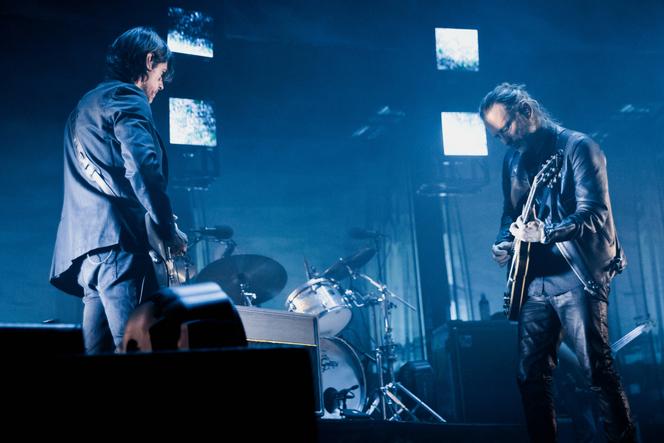 Radiohead performing at the Zénith in Paris on May 23, 2016.
The intersection of art and activism is certainly not new, yet the recent escalation in Gaza has given rise to fervent discussions within the music industry. Musicians have increasingly been compelled to take a stand, reflecting the pressing global consciousness about justice and human rights. Despite the geographically varied levels of public engagement, the underlying theme remains an unwavering call for peace and equity.
Numerous cultural critics have pointed out the complex balance artists must maintain between their personal beliefs and their public personas. Engaging in political discourse through art is risky, often dredging up debates on freedom of artistic expression versus audience expectations. Moreover, the ongoing discourse underscores the nuanced roles musicians play as both entertainers and cultural commentators.
In this era of heightened awareness and activism, artists continue to leverage their platforms to inspire change, calling attention to geopolitical crises far beyond the scope of their home countries. Indeed, the ongoing situation in Gaza proves not only a test of international diplomacy but a profound influence on the creative sphere, urging musicians to rethink their impact in a world where art and politics increasingly collide.