From Sheffield to Stadiums: Arctic Monkeys' Debut Still Bites After 20 Years
Revisiting Arctic Monkeys' groundbreaking debut album, Whatever People Say I Am, That's What I'm Not, on its 20th anniversary and examining its lasting impact on British music and culture.
It's a familiar narrative: tales of gritty nightclubs, aggressive bouncers, and the ever-elusive quest for connection on the dance floor. The people of the United Kingdom have always held a special place for these stories, especially when rendered through the lens of popular music. This tradition, deeply embedded in the country's rock 'n' roll lineage, constantly resurfaces through artists like The Kinks, Elvis Costello, and Pulp. But when that sound came from this fresh new band, everything changed.
The story of young lads escaping their provincial city by forming a band is equally well-worn. They channeled their surroundings – the pulsating music, the sweaty dance floors, the alluring promise of the night – into raw, energetic songs. Their music was messy, exciting, and undeniably real. The British music press, predictably, went wild, creating a hype-frenzy that was almost unheard of at the time. And against all odds, these kids became genuine rock stars in a historical moment where such a thing was still truly possible.
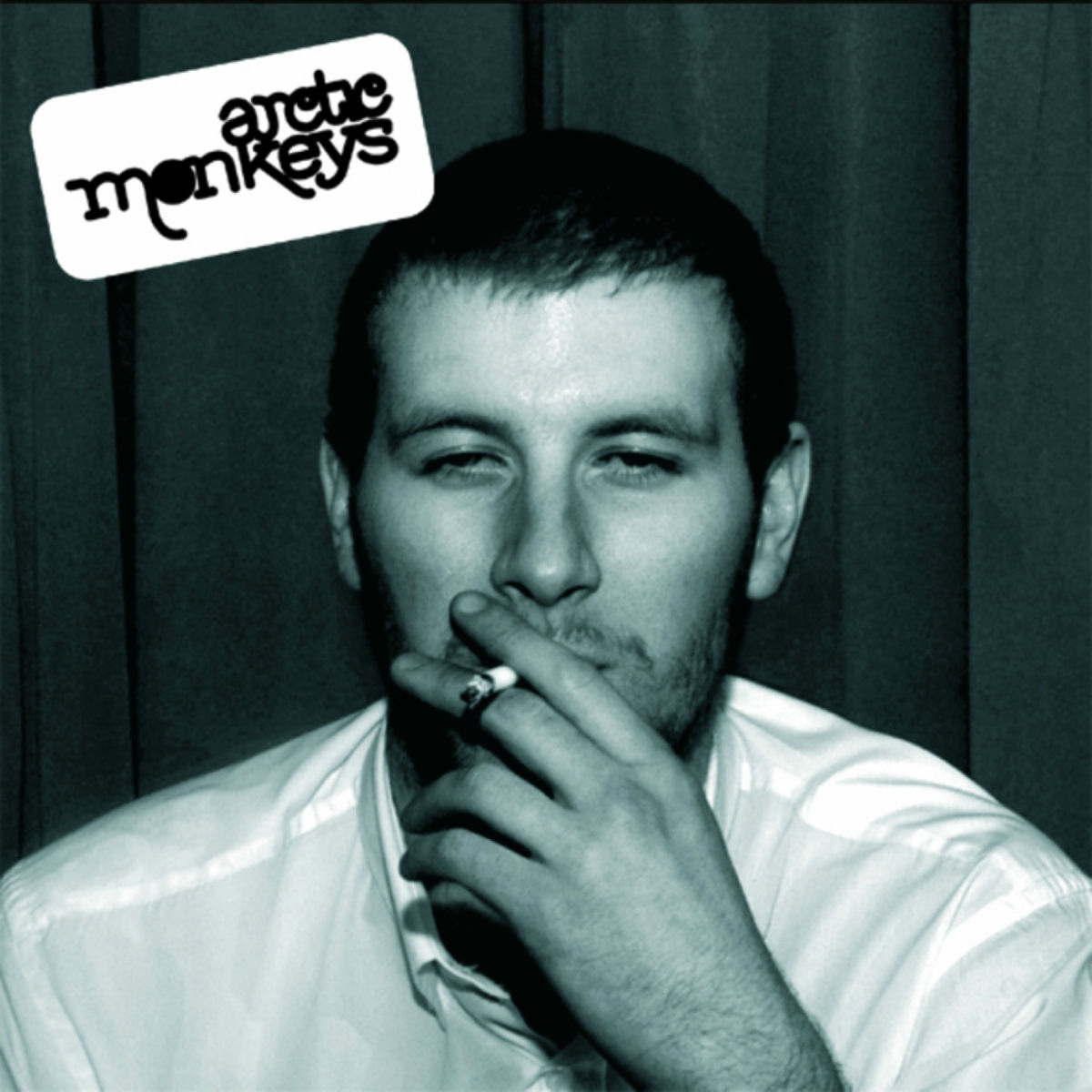
Those kids were the Arctic Monkeys. Their debut album, Whatever People Say I Am, That's What I'm Not, released 20 years ago, captured a specific moment in time. Alex Turner, the frontman, had just turned 20 himself when the album dropped, making the album a snapshot of that age. The iconic line about "dirty dancefloors and dreams of naughtiness" comes from "I Bet You Look Good On The Dancefloor," a track that topped the UK charts months before the album's release.
 Arctic Monkeys Album Art
The hype surrounding Arctic Monkeys felt different, amplified by the burgeoning power of MySpace. I remember buying import copies of NME in the early '00s, witnessing the UK press's infatuation with new bands. But with Arctic Monkeys, MySpace had already laid the groundwork.
The music video for "I Bet You Look Good On The Dancefloor" wasn't a slick production. It was a raw, live performance, capturing the band's awkward energy. Alex Turner even opens the video with a disclaimer: "Don't believe the hype." It's a classic move for hyped bands, a way of staying grounded. But how could they not be affected? How do you sing about the grimy reality of nightclubs when you'd be mobbed the second you walked into one?
The album's dirty dancefloors are those of Sheffield, a city that seems to inspire a lot of kitchen-sink songwriting. Pulp, another Sheffield band, spent years documenting the city's nightlife. Despite the similarities, Turner claimed in a 2006 New York Times piece that Pulp's Different Class came out when he was nine and he was more interested in climbing trees. Ironically, Pulp broke up in 2002, the same year Arctic Monkeys formed.
While Turner was climbing trees, he was already close to drummer Matt Helders. Along with bassist Andy Nicholson, who was later ousted, and guitarist Jamie Cook, they formed Arctic Monkeys for fun when they were around 15. They honed their craft in Turner's parents' garage, and their first gig was opening for The Sound in 2003.
Initially hesitant to be a frontman, Turner found his voice. His sardonic, drawling delivery, heavy with his accent, was a departure from typical rock vocals. The closest comparison was Mike Skinner of The Streets, who used beats to tell stories about Birmingham's nightlife.
Arctic Monkeys recorded a demo, Beneath The Boardwalk, and distributed it at their shows. The band supposedly didn't even create their own MySpace page; fans did it for them. This grassroots approach fueled their rise. While I, in my mid-twenties, wasn't a fan of MySpace's clunky design, I couldn't deny its impact. By 2005, bands like Fall Out Boy were demonstrating the platform's power.
This MySpace-driven success allowed Arctic Monkeys to bypass the traditional gatekeepers of the UK music press, which only added to their allure. They became part of a wave of young UK stars like Amy Winehouse, Lily Allen, and Lady Sovereign, who all felt like direct conduits to youth culture.
But unlike those artists, Arctic Monkeys also fit neatly into the NME-band mold: young, cute, brash, and male. They made energetic guitar music influenced by punk and post-punk, reminiscent of The Libertines and Franz Ferdinand. Their lyrical approach combined with their sound made them The Streets and The Strokes simultaneously. Their rise is captured in their "Fake Tales Of San Francisco" video, filmed by a fan.
At the 2005 Reading Festival, an unsigned Arctic Monkeys played to a massive crowd, proving the hype was real. This led to a bidding war, with the band signing to Domino, the label that had turned Franz Ferdinand into stars. Before Whatever People Say I Am even came out, two singles topped the UK charts: "I Bet You Look Good On The Dancefloor" and "When The Sun Goes Down."
The hype threatened to overshadow the album itself. In its first week, Whatever People Say I Am sold hundreds of thousands of copies, quickly going platinum. NME even declared it the fifth-best British album in history, ahead of Different Class and Revolver.
American critics were more skeptical. While the album received some alt-rock radio play and eventually went platinum, it took 17 years. The consensus was that Arctic Monkeys were just another good British band.
Two decades later, Whatever People Say I Am still resonates. It's stormy, dizzy, and cantankerous. Unlike many of their peers, Arctic Monkeys weren't simply going through the motions. Their guitars and rhythms felt immediate and urgent. The rhythm section was incredibly tight, which makes the later lineup changes even more surprising. The songs feel raw and unpolished, as if the band knew they had to make their mark before being swallowed by the music industry.
Alex Turner's lyrics set the album apart. He's angry, bored, and hungry, lashing out at various targets. He's already railing against glamor, even though he's headed for it himself. He's lamenting a world where music is reduced to ringtones. His delivery of the line "you sexy little swine" is perfect.
 Alex Turner
Whatever People Say I Am, That's What I'm Not won every possible award. The band avoided a flameout, releasing a solid sophomore album and evolving into an arena-ready act before embracing art-pop, hinting at a deeper understanding of Pulp than they initially let on. (Both bands shared an affinity for Scott Walker.) Now, Pulp are back, and Arctic Monkeys are releasing new music. Perhaps there can only be one generation-defining Sheffield band at a time.
In the UK, Arctic Monkeys are now an institution. They've headlined Glastonbury three times. Alex Turner has expressed that he doesn't enjoy playing songs from Whatever People Say I Am anymore, feeling that the album belongs to the world. That's understandable. The album captures their raw, youthful energy, a quality that has been missed in recent years. It's what made their story feel so new.
Listen to Arctic Monkeys on Foxsoundi. Click here to listen!
Comments (0)
Login to comment